Consultant Neurosurgeon & Spine Surgeon
“Treat the patient, not the scan.”
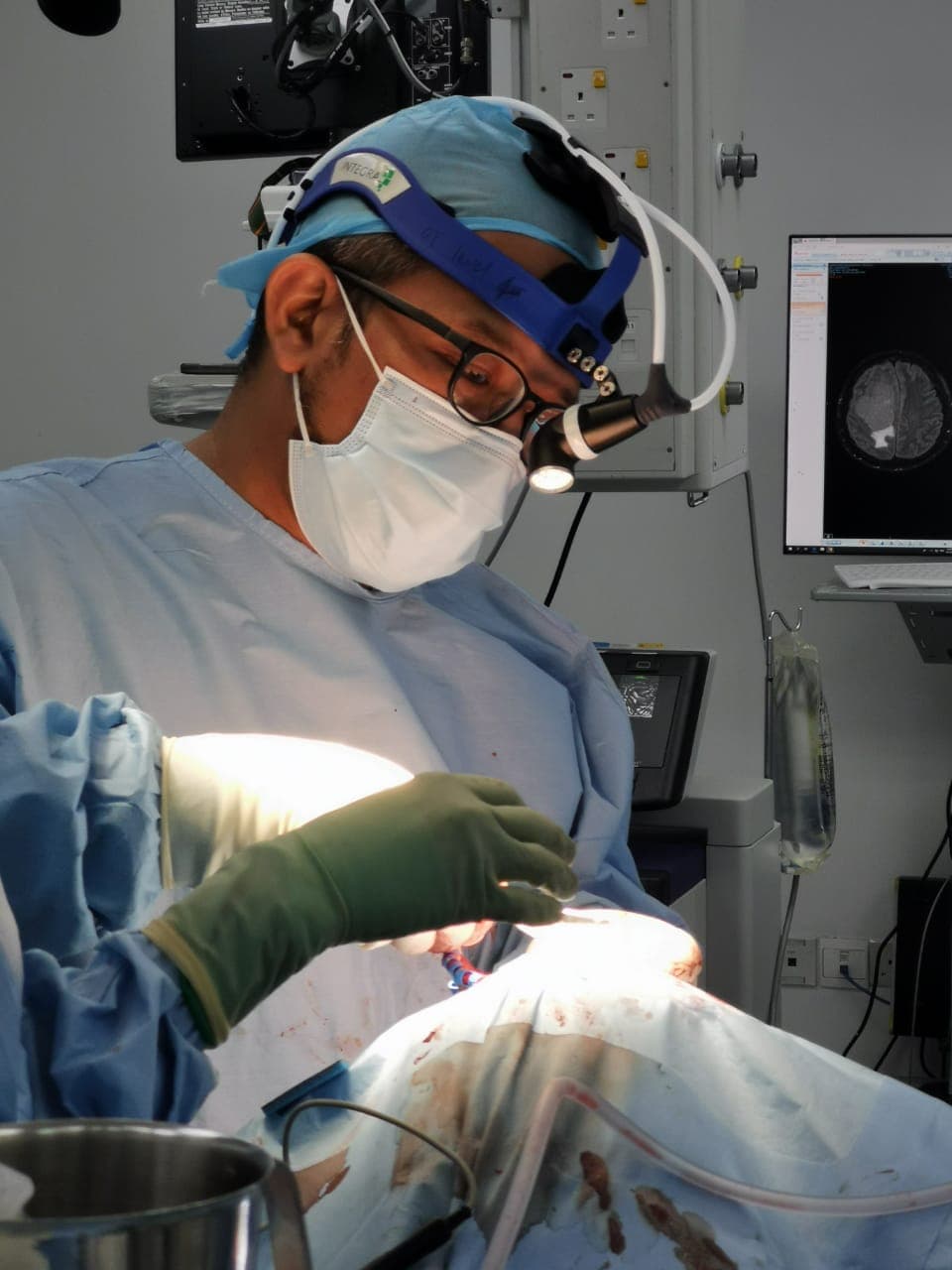
Internationally trained Consultant Neurosurgeon with over twenty-eight years of experience across Ireland, the United Kingdom, and Malaysia. Based at Sunway Medical Centre in Malaysia, I provide comprehensive care for brain tumours, skull base disorders, pituitary disease, spinal conditions, and functional neurosurgery.
Every patient deserves to understand their diagnosis before making any treatment decision. My role is to explain your condition clearly, discuss every appropriate option, and help you make an informed choice with confidence.
Clinic+603-7491 9191·WhatsApp+6011-1116 1030
Conditions & Treatments
What I Treat
Each area links to a full page explaining the condition in plain language.
Brain Tumours
Growths in the brain
Pituitary Tumours
Growths in the pituitary gland
Skull Base Tumours
Growths at the base of the skull
Gamma Knife Radiosurgery
Precision radiation without an incision
From the ward
Lessons & Reflections
Stories from the clinic, the ICU, and a life in neurosurgery.
Patients Who Taught Me
A Giant Leap of Faith
Haji Ambotola sent me his own account of his brain tumour surgery days after the operation in February 2021. He passed away in November 2023 — and his words became something far more enduring than a post-operative note.
Patients Who Taught Me
The Beauty Within
Operating on the brain means seeing something almost no one else will ever see — a structure a few millimetres wide that holds a person's memories, speech and identity.
Before your visit
Patient Guides
Clear, straightforward articles covering the questions patients ask most often.
What happens during brain surgery?
5 min read
Understanding your MRI report
6 min read
Questions to ask your neurosurgeon
4 min read
Recovery after brain surgery
7 min read
From the Journey
2014
Return to Malaysia: Sunway Medical Centre
After nearly two decades in the United Kingdom and Ireland, training, researching, operating, and teaching, I returned to Malaysia. I joined Sunway Medical Centre as a Consultant Neurosurgeon and Spine Surgeon, bringing with me the techniques and multidisciplinary approach I had developed through the UK system. The move was a homecoming and a new beginning.
Read the full journey →Training & record
Credentials
For referring doctors and patients who want the facts at a glance.
Primary degree
MB Bch, BaO
Royal College of Surgeons in Ireland, Dublin (1996)
Fellowship
FRCS (SN)
Royal College of Surgeons of Edinburgh (2009)
Experience
28+ years
Ireland, the United Kingdom, and Malaysia
Practice
Sunway Medical Centre
Consultant Neurosurgeon & Spine Surgeon
Google Reviews
What patients say
“Coming here for slip disc problem. Very good doctor. Explaining all in detail. Humours sense make us released from worrying our sickness. Highly recommended. Very experience doctor.”
Tf Chen · 4 months ago
“I had a very positive experience with this neurosurgeon during outpatient treatment. Dr Syed Abdullah was professional, attentive, and extremely knowledgeable. Everything was explained clearly, and the treatment provided was effective. We felt reassured and well taken care of throughout the visit. Highly recommended.”
Syahrul Afdzan · 6 months ago
“Dr Syed is the most great doctor and he saved my mum's life with his excellent professional medical skill. A thousand words even cannot express my sincere appreciation to him.”
Hongxu Wei · 4 months ago
“Thorough explanation by Dr Syed. Very friendly and approachable. He will advise you as it is. No hiding behind medical jargons or unnecessary procedures. Recommended if you're looking for neurospine Dr!”
Intan Maziah · 2 months ago
“Gave a very detail explanation to us patient as we are not familiar with our condition. Was very humble and easy to talk to making the environment very comforting and reassuring. Everything was easy to understand and comforting.”
kdieyaps Ieya · a month ago
“I had a great experience with Dr. Syed. He is very patient in explaining my daughter's condition and made me feel at ease throughout the process. A doctor with a golden heart! Well done.”
Pek Chuen Lau · 3 months ago
“Deepest thanks to Dr. Syed Abdullah Al-Hadded of Sunway Medical Centre for saving my daughter's life a few months ago. He is such a wonderful surgeon who truly cares, is compassionate and professional. Thank you for being such an amazing doctor!”
Fanny Yau · 6 months ago
“Doctor Syed very professional experience to handle cases mostly made patient and family member understand undergoing procedures.”
Leela Jaya · 7 months ago
“Dr Syed is a very professional doctor, who explains my condition thoroughly, together with the remedy/treatment options, enabling me to make informed decisions to navigate my health challenges 👍”
Rozi Osman · 4 months ago
“Dr Syed Abdullah is a dedicated, detail-oriented, and very honest doctor. He explains things clearly and always says it as is, without unnecessary reassurance or exaggeration. What truly sets him apart is his principle of "treat the patient, not the scan." This gave me great confidence in his judgement and care. Highly recommended.”
eswari ramu · 7 months ago
“Very professional doctor and always calm when explaining the issue which made patients feel care”
Foong Hung Ling · 4 months ago
“Dr.Syed is a very excellent doctor. He explained very detailed and clearly. Thank you for his advice.”
Wanru Yau · 7 months ago
“I would rate him the best one. He explains us very well and informative in every detail.”
Chhour Pichmonyroth · 4 months ago
“The best doctor I have ever met!”
Patrick Jing · a month ago
“Honest and kindly patient to hear and give suitable advice.”
Otto Oktavianus · a month ago
“Exceptionally friendly and excellent doctor 😁”
Angeline Ng · a month ago
“Visited last Monday. Such a great doctor, really skilled, honest, and caring. Thank you!”
Sharifah Zainab · a year ago
“Very satisfied with the services. Good explanation/opinion.”
Taufik Ismail Venti · 5 months ago
“A very good doctor.”
Lim Ai ching · 3 months ago
“Thank you Dr 🙏”
Thun Sreylin · a month ago
“Really good doctor with a very clear explanation.”
Chray Lyheng · 4 days ago
“We are happy with the doctor. The explanations were easy to understand. Our child was very happy because the doctor was friendly. Thank you 🙏🏼”
Srikandi Dien · 2 weeks ago
“Dr. Syed Abdullah is the best. He is very thorough and very friendly with all his patients. He gives plenty of time for consultations. Everything is explained thoroughly. Two families have been here. Recommended.”
Oloan Sirait · 4 months ago
“Dr. Syed is a very kind and communicative doctor. I am very impressed with the way he treats his child patients. Even my child considers Dr. Syed a friend. Thank you so much, Dr. Syed. May you always be healthy and blessed by God. So that you can help many people. 🙏🙏🙏”
Rifie Liu · 6 months ago
“Masyallah the doctor is very kind and friendly, thank you doc for your advice 🙏🏻😇 the nurse is also very kind”
selva lianda · 4 weeks ago
“A visit with a friendly doctor, with easy-to-understand explanations. Ample time for the consultation, and the doctor wasn't rushed. He was knowledgeable in his field.”
Widya Setyono · a month ago
“Masyaallah,,,the doctor explained very well so that it was easy to understand, the doctor also did not recommend examinations if it was deemed unnecessary.”
Maria Ulfa · a month ago
“Very good and supportive doctor. Thank you doctor for helping me a lot throughout my mother's treatment ❤️”
Ridhuan Skater · 6 months ago
“The doctor was very good at explaining the symptoms I was experiencing. The doctor is very experienced.”
ericsa · 4 months ago
“Very satisfied to get a 2nd opinion from Dr Syed Abdullah Al-Hadad. Thank you Dr.”
Lina Rosli · 5 months ago
“Sincere and transparent doctor. Easy to understand all the explanations as a layperson.”
msho 2209 · a month ago
“Dr. Syed Abdullah provides the best service. He is very understanding of the patient's condition and provides professional and friendly service. Very satisfied and highly recommended.”
Nikjah Hazlinda · 7 months ago
“Dr Syed is very patient and kind..his explanation is very clear and easy to understand.”
Arianto Wibowo · 7 months ago
“Best and likes to joke. Wise and honest, but not panic-inducing.”
Bene Dion Rajagukguk · 2 months ago
“Doc and staff are very helpful”
Norezelina Azmi · 5 months ago
“Dr Syed Abdullah Al-Haddad is very efficient and professional. He is very kind, patient, very experienced and gives very clear explanations. Thank you Doctor for solving the mystery of my illness. Miss Ishwari is also very kind and very helpful. Thank you for being very patient with me 😊”
Nita Ariffin · 2 days ago
“Very good, thank you”
Intan K.D · 2 weeks ago
“Very good”
niswatul hafizhah · 2 weeks ago
“I really feel the very good that Dr. Syed Abdulah Al-Haddad did in my actions so that I can recover and be healthy quickly, after a major operation... today I returned to Indonesia (4 days home), now I am in Bandar. Thank you, kind Dr.., Thank God.. all nurses.”
liana hidajat · 2 months ago
“the doctor is very good in his service especially dr. syed abdullah”
Ricardo Ivan Roy Sirait · 4 months ago
Hover to pause
Featured Video
What are the latest surgical procedures available to remove a brain tumour?
Dr Syed Abdullah Al-Haddad discusses the most current surgical approaches for brain tumour removal, including awake craniotomy and intraoperative mapping.
Brain Tumour Surgery
FAQ
Common questions
What patients most often ask before getting in touch.
Where does Dr Syed Abdullah Al-Haddad practise in Malaysia?
At Sunway Medical Centre, Tower D-6-11, 6th Floor, 5 Jalan Lagoon Selatan, Bandar Sunway, 47500 Subang Jaya, Selangor — about 25 minutes from central Kuala Lumpur. Patients travel from across the Klang Valley and from elsewhere in Malaysia and the region.
What conditions does he treat?
Brain tumours, pituitary tumours, skull base conditions, neuro-oncology, spinal degenerative and tumour-related disease, and trigeminal neuralgia. He also performs awake craniotomy, where the patient is awake during part of the operation so that speech and movement can be mapped and protected.
What should I bring to a first appointment?
Your identity card or passport, any previous scan films or reports (MRI or CT), a list of your current medications, your insurance or guarantee letter if applicable, and, if possible, a family member or friend.
Does he see international patients?
Yes, patients travel from across the region for consultation and treatment at Sunway Medical Centre. If you are sending your case ahead of a visit, bring or send the actual MRI or CT image files (usually on a CD or as a downloadable link from the scanning centre), not just the written radiology report — a treatment recommendation cannot be made reliably from the report alone.
Do I need a referral to see a neurosurgeon?
No. A referral letter from your GP or another specialist is helpful because it carries your history, but it is not required. Appointments are arranged through Sunway Medical Centre — you can submit an enquiry on their website, call +603-7491 9191, or WhatsApp +6011-1116 1030.
What are his qualifications?
He holds the degrees MB Bch, BaO, LRCSI, LRCPI from the Royal College of Surgeons in Ireland (RCSI) in Dublin (1996), MRCS, an MSc in Trauma Surgery from the University of Birmingham, and FRCS (Surgical Neurology) from the Royal College of Surgeons of Edinburgh. He completed his CCT in Neurosurgery in the United Kingdom in 2010 and was Consultant Neurosurgeon and Clinical Lead in Neuro-Oncology at Aberdeen Royal Infirmary, NHS Scotland, before returning to Malaysia in 2014.
Does he see second-opinion patients?
Yes. Many patients come after a diagnosis elsewhere, wanting the scan explained again and the options set out clearly before deciding. Bring your imaging and any reports you already have. A second opinion does not commit you to surgery — it is simply a chance to have your options explained clearly before you decide anything.
What should I do if my symptoms are urgent?
Go to the nearest emergency department rather than waiting for a clinic appointment or messaging on WhatsApp if you have any of the following: rapidly worsening weakness, reduced consciousness, a sudden severe headache unlike any before, a new seizure, sudden loss of vision, or loss of bladder control together with leg weakness or numbness in the saddle area. These require immediate in-person assessment.
Visit
Where I practise
Appointments are arranged through Sunway Medical Centre. My team will help you with scheduling, insurance, and any questions before your visit.
Clinic
Tower D-6-11, 6th Floor
5, Jalan Lagoon Selatan, Bandar Sunway
47500 Subang Jaya, Selangor
Malaysia
Clinic hours
Monday – Friday: 9:00 AM – 5:00 PM
Saturday: 9:00 AM – 1:00 PM
Sunday and public holidays: closed
Get in touch
Clinic: +603-7491 9191 (Ext. 16404)
WhatsApp: +6011-1116 1030